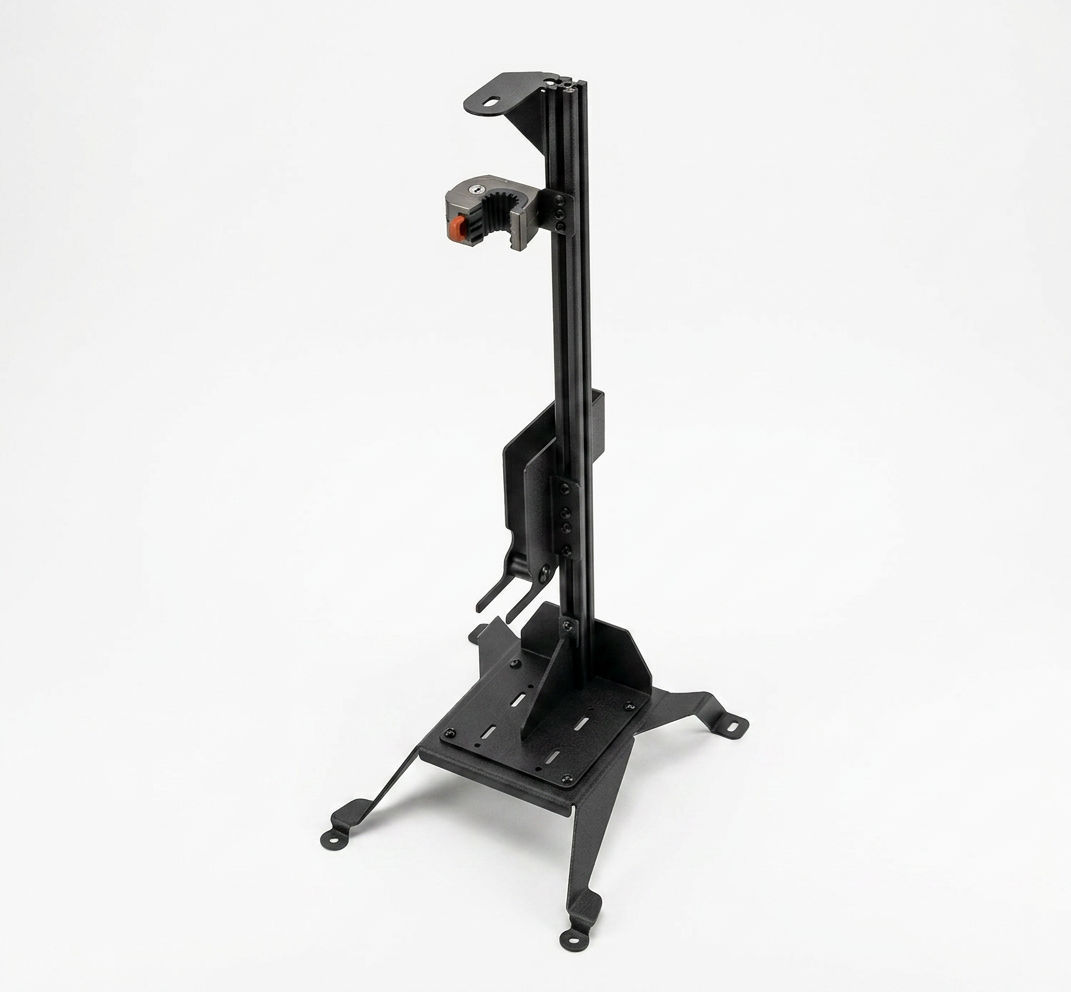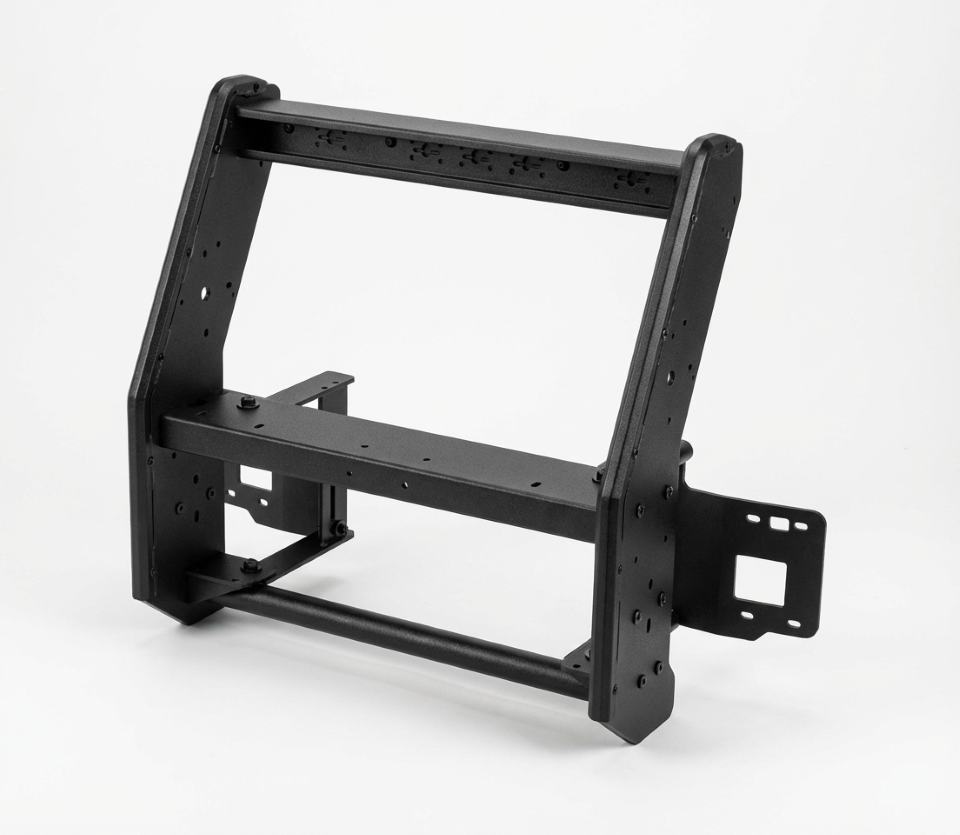

On April 7, 1928, a radio transmitter on Belle Isle in Detroit started sending calls to patrol cars. Station W8FS of the Detroit Police Department became the first agency in the country to dispatch its cars by radio on a regular basis.
It changed everything about police work. An officer no longer had to find a call box. The call found the officer.
It also created a problem nobody thought about for the next 60 years.
The patrol car had just become an office...but there was no desk in it.
This is the story of how that changed.
Sixty years of workarounds
Radio gave officers information. Five years later, the two-way radio let them answer back. They were first run regularly by the Bayonne, New Jersey police in 1933.
Officers used paper to keep track of everything: Incident reports, citations, field interview cards, accident diagrams. Officers wrote them in the car on a clipboard on the steering wheel or balanced on their knees. When it was dark, their only option was to hold their flashlight in their teeth. The only solid surface was the vehicle itself...
It would be sixty years before anyone stopped to fix it.
1979: The mobile data terminal arrived
In 1979 the Vancouver Police Department installed 12 Motorola D-1118 mobile data terminals (MDTs) in cruisers for a one-year trial. While the department considered MDTs a success, they did not come without their own set of issues.
The terminals worked — barely.
- Responses came back so slowly that “the waiting officer forgot they ever asked”
- “The keyboards were not durable enough to handle daily wear and tear of the job”
- “The screens were difficult to read in daylight”
Officers made do with them anyway. Database requests nearly doubled within four years and allowed officers to accomplish more than previously possible. The industry spent the next decade building better terminals, and yet, officers were still jotting their notes on paper to keep track of it all.
1993: An Inventor in Arkansas Listens
Bill Sage founded Assembled Products Corporation in Rogers, Arkansas in 1983. After inventing one of the first motorized shopping carts, the Martcart, he then created the first centralized pressure washer systems, Spraymaster, in 1991.
Sage discovered his next innovation over coffee and donuts with his friend, a patrol officer. He listened to the problem that no one had seemed to solve...his friend’s “office” had no desk.
Not long afterwards, in 1993, he built a bolt-in desk platform. Something anchored to the vehicle. Something that gave an officer a real surface to work from. He called it Jotto Desk. The patent was later granted in 1997.
1996: The Laptop Changes the Job Again
One year before that patent was granted, Panasonic introduced the Toughbook CF-25. Rugged computing arrived, and it went straight into patrol cars.
The desk had to become something else.
Engineering a surface to write was one thing. The challenge was something else entirely to develop a computer mount that holds eight pounds of hardware through a pursuit, a curb strike and a shift change, allows officers to read in direct sun, swings out of the way when an officer needs to exit fast, and does not interfere with airbag deployment.
The industry has been working on making their mounts better for officers ever since.
| Year | What changed inside the patrol car |
|---|---|
| 1928 | Detroit Police begins regular one-way radio dispatch to patrol cars. |
| 1933 | Bayonne, N.J. runs the first regular two-way radio. The car can talk back. |
| 1979 | Vancouver P.D. pilots 12 Motorola D-1118 mobile data terminals. |
| 1993 | Bill Sage watches an officer write a report on a clipboard on a steering wheel. |
| 1996 | Panasonic launches the Toughbook CF-25. The laptop goes rugged. |
| 1997 | Sage's bolt-in desk is granted a patent. He calls it Jotto Desk. |
| 2026 | Ten product lines later, Jotto Desk becomes Tenhold. |
Ten Product Lines Later
With the introduction of the rugged laptop, Jotto Desk eventually developed its mobile desk into a laptop compatible computer mount. Then, the product lines expanded.
Consoles came. Then partitions, gun racks, window armor, cargo systems, seat replacement systems, and push bumpers.
In 2026 the company retired the Jotto Desk name. CEO, Justin Sparks, explained the reasoning to Talk Business & Politics: “The product line and the offerings grew beyond this mobile desk set up years and years ago. Jotto Desk was not known like we wanted it to be for all the amazing products we have put out there.”
The name “Tenhold” came from the latin “tenere” meaning to “to hold” or “secure” — a commitment we make to agencies who trust us with their vehicle gear. Tenacity and holding the line.
The Desk Is About to Change Again
Ninety-eight years after Detroit put a radio in a patrol car, the mobile office is still not finished.
Officers are running more hardware than ever, in vehicles with less room than ever, surrounded by airbags that did not exist when most mounting standards were written. The screen still has to be readable. The mount still has to hold. And an officer with one hand on a door handle should not need the other one to fight a piece of equipment.
We have been working on that.
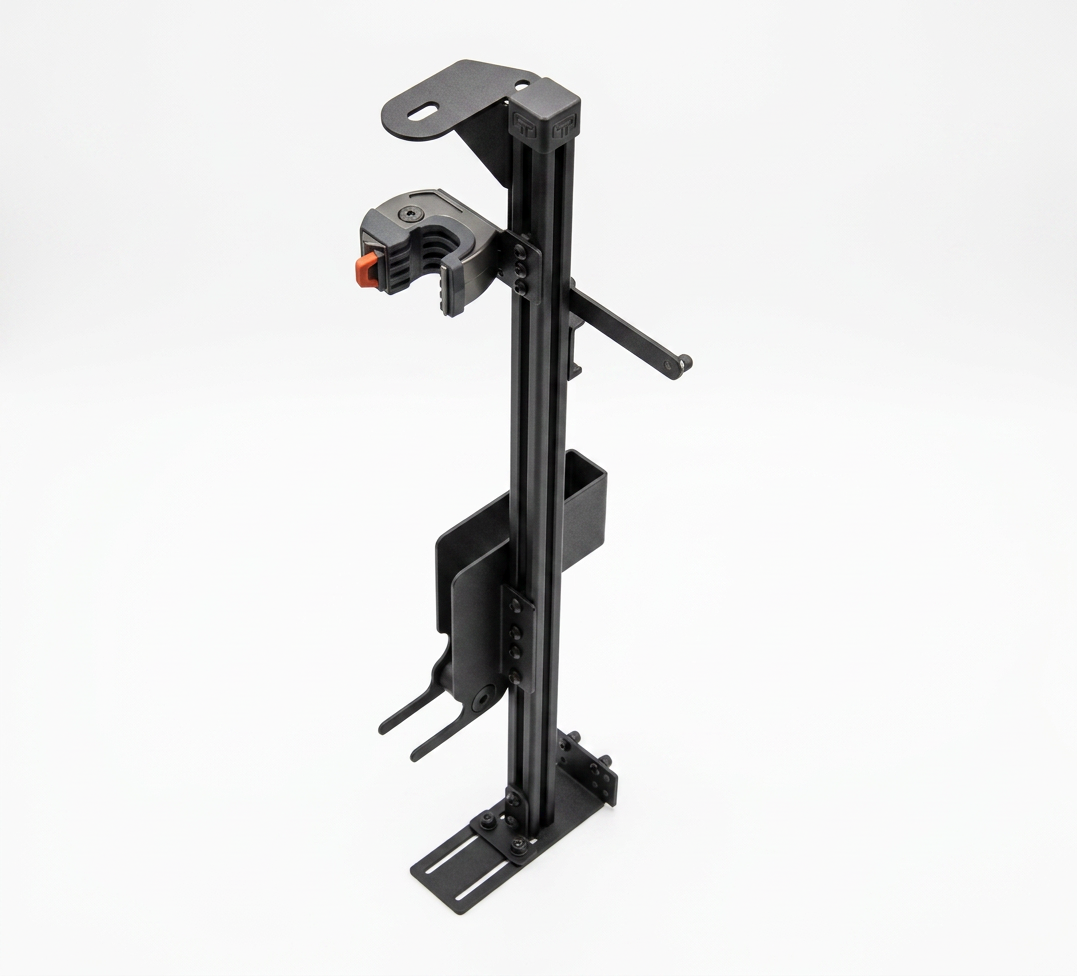
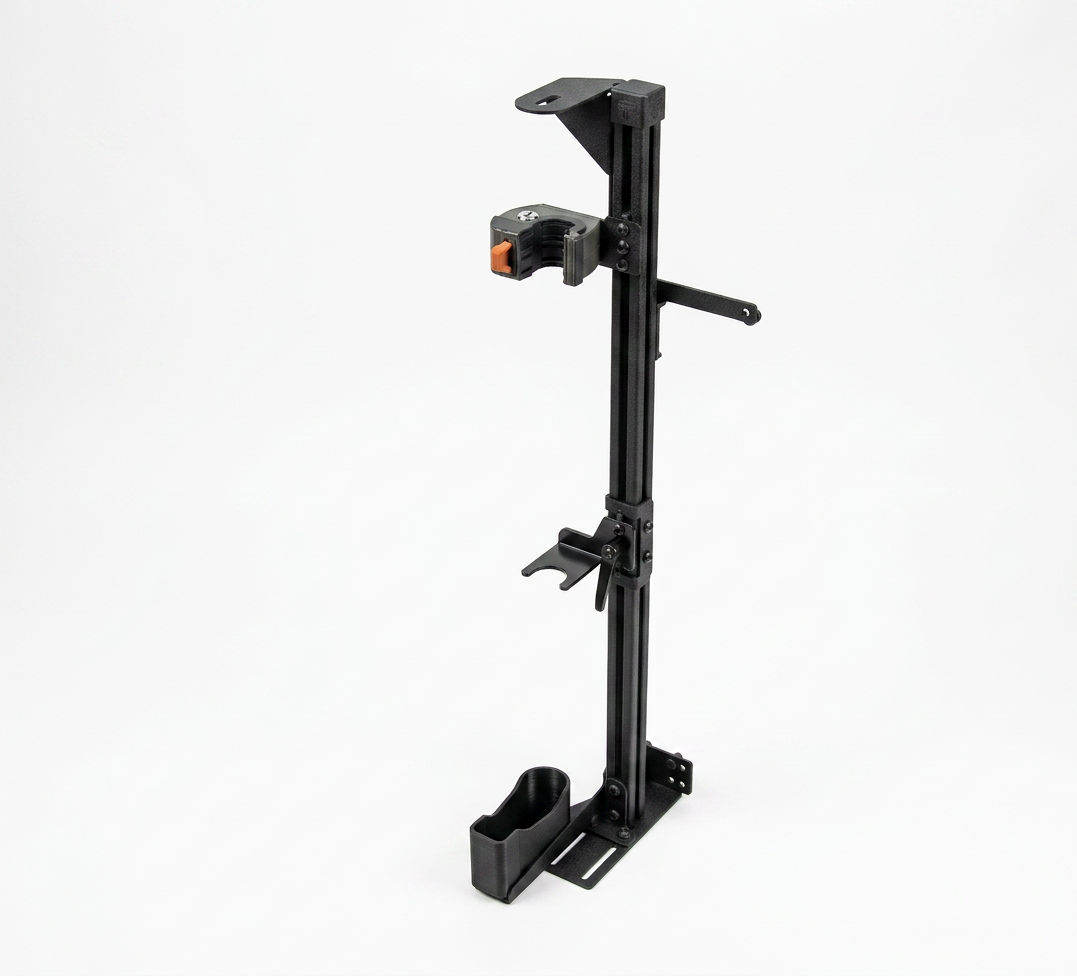
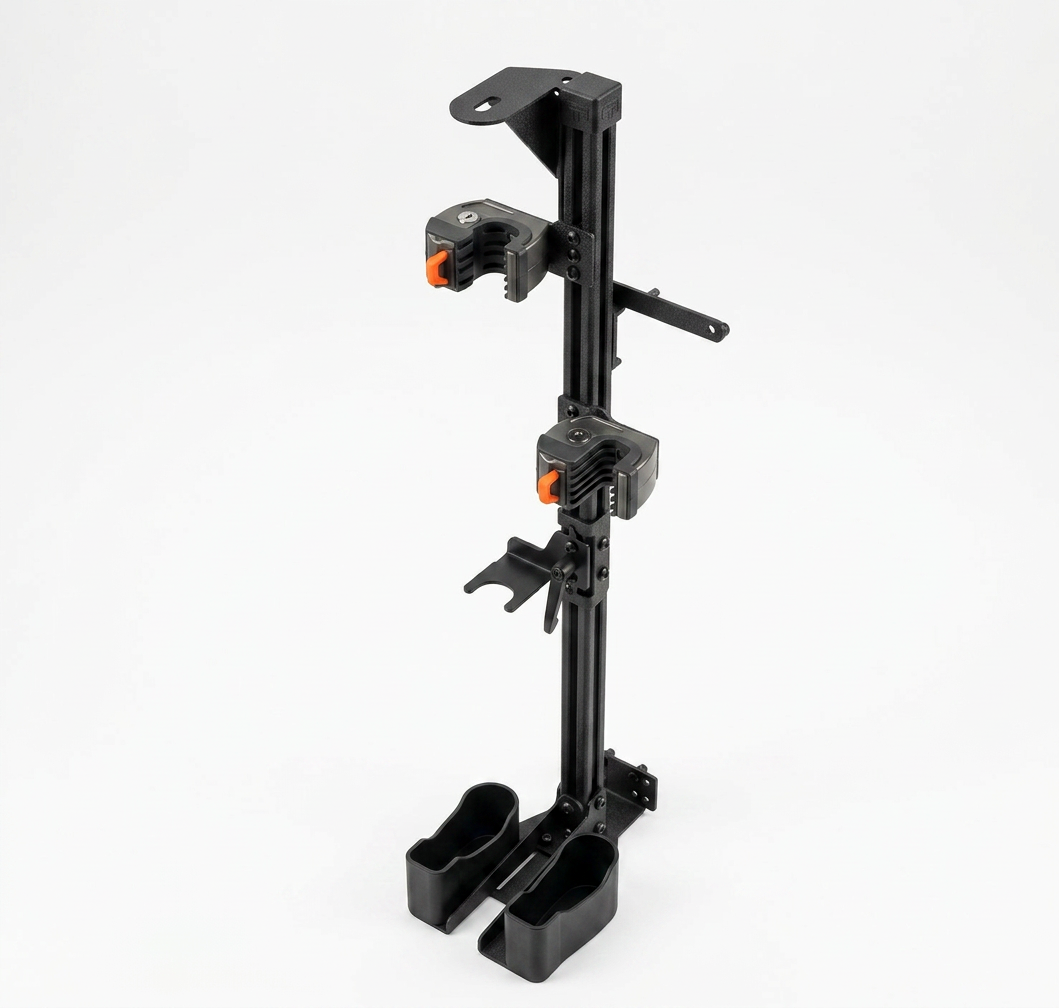
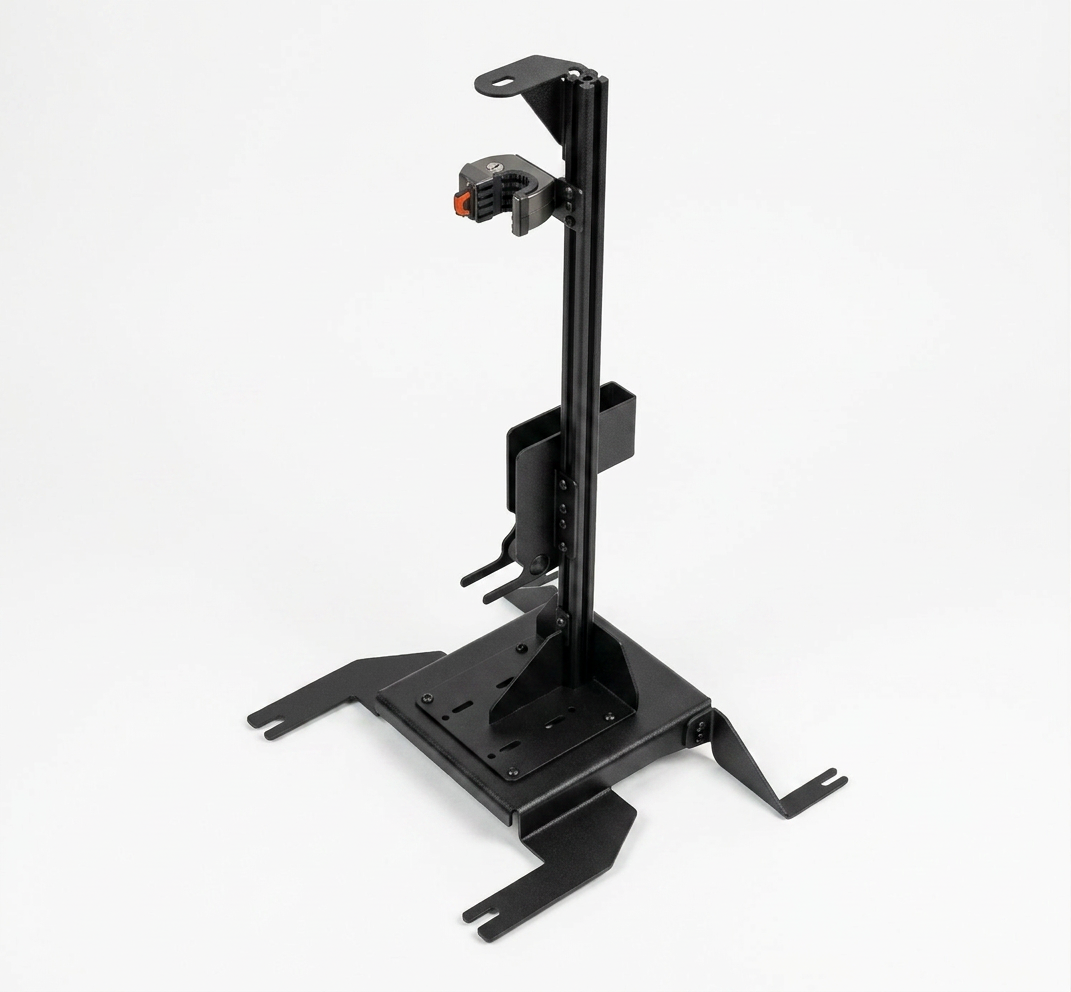
Something new is coming to the computer mount platform. We will have more to say soon.
Seventy years to build the first real desk. We do not intend to take that long on the next one.
Until then, see what we build for the vehicles your teams run every shift at Tenhold, or talk to our team about your fleet.
The Ways Vehicle Equipment Affects Officers
This is where the story stops being about convenience.
In 2023, NIOSH researcher Hongwei Hsiao published a study in Applied Ergonomics assessing 974 law enforcement officers across 12 U.S. sites. The findings reveal several common issues.
- 88% of officers reported discomfort or pain by the end of their shift
- The lower back and hips were the most affected areas
- 41% pointed to inadequate seat adjustment
- Roughly one-third reported neck pain tied specifically to in-vehicle mobile data terminal use
- One in three officers has a sore neck because of where a screen sits.
These findings show more than a “comfort” issue. That is sick time, light duty, and potentially shorter careers.
Officers’ acute need for physical and psychological health makes the case for higher quality and ease of use for their patrol vehicle fitment. Making their lives safer and better through our next innovation is the story we intend to put in tomorrow’s history books.